Baccarat books: learning resources and background reading
Updated: February 12, 2026
Baccarat is a classic card game known for simple core rules and multiple variants. Readers typically look for baccarat books to understand the third-card rule, the odds and house edge, and the table culture around different formats. This guide gives a neutral overview of commonly referenced baccarat books and the topics they tend to cover, with practical help for choosing a title based on your goal.
If you want a rules-first introduction alongside this book guide, see the baccarat overview. Background reading is also available in the history of baccarat and the baccarat glossary.
Quick Facts
Main variants: Punto Banco (casino standard), Chemin de Fer, Baccarat Banque
Lowest house edge (typical rules): Banker bet (usually lower than Player)
Commission: A fee (commonly 5%) taken on Banker wins in many tables to balance odds
Key concept: Past hands do not predict future hands; results are independent in standard casino baccarat
Best Baccarat Books (2026): Quick Picks
This section highlights baccarat books by use-case rather than performance claims. The goal is to help you match a book to what you want to learn: rules, odds, bankroll discipline, table etiquette, or how betting systems are presented. Even the most detailed baccarat strategy books do not change the underlying house edge of standard casino rules.
Top picks by goal (not performance-ranked): For rules and table flow, beginner guides such as John Patrick’s Baccarat are commonly used. For plain-language learning, books like John May’s Baccarat for the Clueless are often chosen. For odds framing and why some bets “cost more” long-term, intermediate titles such as Brian Kaysar’s Secrets of Winning Baccarat are frequently referenced.
If you want broader casino context (multiple games), multi-game books like Frank Scoblete’s Casino Conquest are typically used as an overview rather than a dedicated baccarat textbook. If your interest is specifically betting systems, books such as The Baccarat Battle Book are usually read most effectively with a critical lens and a clear understanding of independence of hands.
Comparison Table: Baccarat Books at a Glance
Below is a fast-scan comparison of the baccarat books discussed on this page. It focuses on level, typical emphasis, and practical limitations to keep expectations realistic. Availability can vary by edition and marketplace.
| Book (Author) | Level | Primary focus | Format notes | Best for | Caution / limitation |
|---|---|---|---|---|---|
| Baccarat (John Patrick) | Beginner | Rules, flow of play, terminology | Often available in English editions (print/ebook vary) | Learning the game structure quickly | Does not change the underlying house edge |
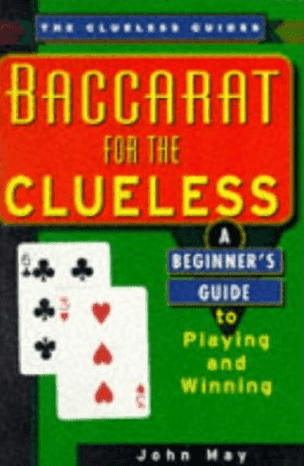
| Baccarat for the Clueless (John May) | Beginner | Plain-language explanations, examples | English-focused; edition availability varies | Readers who prefer less technical instruction | Some “tips” are descriptive rather than mathematical |
| Secrets of Winning Baccarat (Brian Kaysar) | Intermediate | Bet types, commission, odds framing | Typically found via major ebook/print marketplaces | Understanding why some bets cost more long-term | Short-term results remain highly variable |
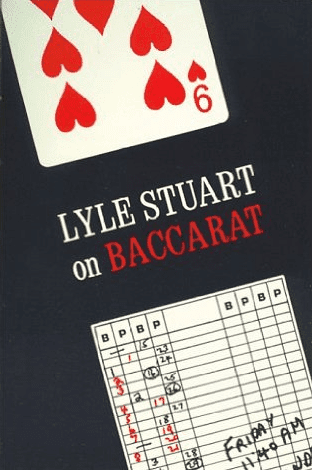
| Baccarat (Lyle Stuart) | Beginner–Intermediate | Rules + practical play habits | Older editions are common; language is usually English | Learning common mistakes and basic discipline | Be cautious with any predictive claims |
| Casino Conquest (Frank Scoblete) | General | Multi-game; includes baccarat sections | Often reprinted; formats vary | Context across casino games | Baccarat coverage may be shorter than dedicated books |
| The Baccarat Battle Book (Frank Scoblete) | Intermediate | Betting systems, staking plans | Commonly available in English | Understanding how systems are presented | Systems do not remove house edge in standard rules |
How to Choose a Baccarat Book
Most baccarat books fall into a few categories: (1) rules and variants, (2) odds and expected value, (3) betting systems and pattern tracking, and (4) etiquette, history, and casino context. Choosing the right book usually means matching the author’s focus to your learning goal and preferred format (paperback vs ebook). It also helps to confirm which baccarat variant the author assumes.
Did You Know?
A credible baccarat book usually: (1) explains the third-card rule with a clear chart, (2) states the house edge by bet type, (3) separates expected value (long-run average) from variance (short-run swings), and (4) avoids guarantees or “risk-free” claims.
Choose by Goal: Rules, Odds, Systems, or Etiquette
If your goal is to learn how to play baccarat, prioritize rule-first books with a step-by-step dealing sequence and a readable third-card rule chart. If your goal is to understand baccarat odds and house edge, choose books that explain commission, expected value, and why Tie and many side bets are typically higher-cost. If your goal is to understand betting systems, look for books that disclose assumptions and discuss variance rather than implying reliable prediction.
For etiquette and table procedure, books that discuss Chemin de Fer and casino culture tend to be more useful than strictly Punto Banco rule summaries. Readers interested in broader context across games may prefer multi-game casino books, then supplement with a dedicated baccarat rules guide.
Edition Checklist (Before You Buy)
Baccarat books often exist in multiple editions, and small rule assumptions can change how examples read. Before buying, check the publication year, the variant covered (Punto Banco vs Chemin de Fer vs Banque), and whether the author’s examples match modern casino and online tables. Also confirm whether the book assumes a Banker commission (commonly 5%) or a “commission-free” rule set, because that changes the cost comparison between bets.
- Variant assumed: Punto Banco is the standard for most online baccarat; advice may not transfer to variants with player decisions.
- Commission rule: Does the author assume a 5% Banker commission, a different rate, or a no-commission table with altered payouts?
- Side bets: Many older books focus on Player/Banker/Tie only; newer tables may include optional side bets with higher house edge.
- Examples and charts: Look for a clear third-card chart and consistent terminology that matches modern table labels.
- Math transparency: Prefer books that show how claims are calculated (or clearly state when content is descriptive rather than mathematical).
Where to Buy or Borrow (Ebook, Paperback, Library)
Many baccarat titles are available through major ebook and print marketplaces, commonly as ebook and paperback. Libraries may also carry classic gambling titles, and catalog search can be useful when a book is out of print. When comparing listings, verify the author name, edition, and publication date to avoid accidentally purchasing an abridged or unrelated title with a similar name.
English editions are the most common for niche baccarat titles, while translations can be limited. If you are using a translation, double-check that key terms (Player/Banker, commission, natural, Tie) align with the table labels you expect to see.
Baccarat Basics Books: Rules, Variants and Terminology
Rule-focused baccarat books usually start with the scoring system: aces count as 1, 10/J/Q/K count as 0, and totals use modulo 10 (only the last digit matters). They then explain the dealing sequence and the standard wagers (Player, Banker, Tie). In most formats, the third-card rule is the central procedure that determines when extra cards are drawn and therefore shapes the game’s probabilities.
Terminology matters because the same word can be used differently across variants and casinos. For a quick reference while reading, the baccarat glossary can help align book language with modern table labels and common online interfaces.
The Third-Card Rule: What Good Books Should Include
A clear third-card explanation typically includes a chart that separates Player drawing rules from Banker drawing rules. The best charts show outcomes by Player total (0–9) and Banker total, then condition Banker decisions on the Player’s third card when one is drawn. Readers usually use the chart as a reference tool rather than something to memorize in full.
When evaluating a “how to play baccarat” book, check whether the chart is readable at a glance and whether it matches the variant being discussed. In Punto Banco, these rules are fixed and do not involve player choice, which is why many beginner books emphasize table flow and terminology more than decision-making.
Baccarat Variants in Books: Punto Banco, Chemin de Fer, Banque
Many books separate baccarat into three headline variants. The differences are important because advice written for one format may not apply cleanly to another. Most discussions of baccarat odds and house edge assume standardized Punto Banco rules.
- Punto Banco baccarat: The casino-standard form where drawing decisions are fixed by the third-card rules. This is the format used by most online baccarat.
- Chemin de Fer baccarat: Players may take turns acting as the bank, and some decisions can involve player choice depending on the rule set. Books often include etiquette and procedure here.
- Baccarat Banque: A bank role can be held for longer, with a structure that differs from Chemin de Fer. Coverage varies widely by author and edition.
If a book blends variants without clearly labeling them, it can create confusion about what is fixed (third-card rules) and what is optional (banking decisions or role management). For historical context on how these variants evolved, see the history of baccarat.
Math & Odds: What the Best Books Explain
Math-focused baccarat books explain the cost of each bet type (house edge), the effect of commission on Banker wins, and why independent hands limit prediction. They often compare baccarat to other casino games to illustrate expected value and variance; similar concepts are discussed in variance and house edge.
A key takeaway is that “lowest house edge” does not mean “player advantage.” It means the expected loss per unit wagered is typically lower compared with higher-cost bets, assuming standard rules and fair dealing.
House Edge by Bet (Player/Banker/Tie) and Commission
In standard Punto Banco with a commission on Banker wins, the Banker bet is commonly the lowest-house-edge option, with Player slightly higher. The Tie bet is usually much higher house edge than either main bet, and many side bets are higher still. Exact percentages vary by table rules, which is why many books encourage checking the specific commission and payout structure.
Commission is typically explained as a balancing mechanism. Because Banker wins slightly more often than Player under fixed drawing rules, many tables charge a commission (often 5%) on Banker wins to keep the main bets relatively close in cost.
Variance, Streaks, and Bankroll Management
Variance describes how far short-term results can drift from the long-run average. Baccarat can produce long streaks of Banker or Player outcomes purely due to randomness, which can make a system look effective in a narrow sample. Bankroll-management chapters usually focus on setting limits, using consistent stakes, and planning for losing streaks rather than trying to “force” outcomes.
When a baccarat book discusses bankroll management, look for practical risk-control ideas (time limits, stop-loss limits, and session planning) rather than claims that bankroll rules create a mathematical advantage. Bankroll management can reduce the risk of extreme session losses, but it does not change expected value.
Roadmaps, Scoreboards and Pattern Tracking
Many baccarat tables display “roadmaps” (scoreboards) that record past outcomes. Books vary in tone: some treat roadmaps as a neutral tradition and record-keeping tool, while others propose pattern-based betting approaches. Under standard Punto Banco rules, hands are independent, so the roadmap is a history display rather than a causal driver of future results.
Special Feature
Common baccarat roadmaps: Bead Plate (Bead Road), Big Road, Big Eye Boy, Small Road, and Cockroach Pig.
What they represent: Different visual encodings of the same past outcomes (Player/Banker/Tie), used for tracking and table rhythm—not for changing the underlying odds.
Do Roadmaps Predict Outcomes?
In standard casino baccarat, roadmaps do not provide reliable prediction because each hand is an independent event. A roadmap can still be useful as a clean log of results, especially if you want to review a session or understand how the table display works. Claims that a roadmap “signals” future outcomes should be evaluated as a betting narrative unless supported by transparent analysis that accounts for commission and full-sample results.
If a book promotes pattern tracking, check whether it explains why the method should work under independence, and whether it reports results in a way that can be verified. Many readers ultimately treat roadmaps as a cultural feature of baccarat rather than a mathematical tool.
Betting Systems in Baccarat Books: How to Read Them Critically
Many baccarat strategy books include staking plans (progressions) and rules for switching between Banker and Player. These systems can change volatility and the “feel” of a session, but they do not remove the house edge in standard rules. A critical reading approach focuses on assumptions, sample size, and whether the book separates short-run variance from long-run expected value.
- Commission included: Results should reflect the actual Banker commission (or the specific no-commission payout structure).
- Stopping rules disclosed: “Stop when ahead” rules can make examples look better without changing expectation.
- Sample size and transparency: Look for large samples and clear reporting, not a few selected streaks.
- Survivorship bias: A system may be presented after a favorable run; that does not show long-term performance.
- Realistic constraints: Consider table limits, bankroll limits, and whether the progression can be sustained.
Important
No betting system can eliminate the house edge in standard Punto Banco baccarat. Be cautious with “guaranteed win” language, selective win-streak examples, and claims that past hands predict future hands.
Book-by-Book Summaries (What You’ll Learn, Who It’s For)
The summaries below describe the typical emphasis of each title and how readers commonly use them: rules learning, odds context, bankroll discipline, or narrative/table perspective. Availability can differ by edition, so it helps to verify the language, publication date, and which baccarat variant the author assumes. The notes below are descriptive and do not imply guaranteed results.
Lyle Stuart — Baccarat
Lyle Stuart’s Baccarat is commonly described as a practical introduction that mixes rules explanation with “how to approach the table” guidance. Typical topics include the flow of play, common beginner errors, and basic bankroll discipline. Readers often use it as a bridge between learning the rules and feeling comfortable with casino-style procedure.
Best for: Readers who want rules plus general play habits.
Typical strength: Practical framing and basic concepts.
Typical limitation: Treat any predictive language cautiously and separate it from general discipline advice.
John Patrick — Baccarat
John Patrick’s Baccarat is frequently referenced as a beginner-oriented guide that explains the game’s core logic, table terminology, and dealing sequence. It is often used to understand how baccarat differs from games such as blackjack or roulette, particularly because decisions are largely predetermined under Punto Banco rules. Many readers use it specifically to get comfortable with the third-card framework and common table terms.
Best for: Beginners prioritizing clarity and structure.
Typical strength: Terminology and step-by-step learning.
Typical limitation: Explains how baccarat works, not how to remove the house edge.
Brian Kaysar — Secrets of Winning Baccarat
Brian Kaysar’s Secrets of Winning Baccarat is often associated with explaining bet options and why rules and commission affect expected value. Readers typically encounter comparisons between Player/Banker/Tie, discussion of how “cost per bet” works in practice, and reminders that short-term outcomes can deviate widely from theoretical averages. It is commonly used as a transition from rules learning to odds-focused thinking.
Best for: Readers who want baccarat odds and house edge context in accessible terms.
Typical strength: Connects betting options to long-run expectation.
Typical limitation: “Winning” language can be marketing; the practical value is usually the EV framing.
Frank Scoblete — Casino Conquest
Casino Conquest covers multiple casino games and typically includes baccarat as one section among others. In baccarat-related chapters, the emphasis is often on describing formats, table conditions, and general observations about how baccarat is presented in casinos. As a multi-game book, it can be useful for readers comparing baccarat to other table games and their risk profiles.
Best for: Readers looking for broader casino context rather than a dedicated baccarat manual.
Typical strength: Cross-game perspective and descriptive coverage.
Typical limitation: Dedicated baccarat books usually provide more detail on rules charts and bet math.
Frank Scoblete — Guerilla Gambling
Guerilla Gambling is not exclusively a baccarat book, but it is commonly discussed in connection with bankroll management and risk control. It typically focuses on behavioral discipline: avoiding impulsive decisions, planning sessions, and understanding how emotional reactions to wins and losses can distort judgment. Readers often apply these ideas across games rather than only to baccarat.
Best for: Readers interested in bankroll management concepts that apply across games.
Typical strength: Behavioral framing and general risk principles.
Typical limitation: Does not substitute for learning baccarat’s specific rules and bet math.
John May — Baccarat for the Clueless
John May’s Baccarat for the Clueless is typically positioned as an accessible guide that starts with fundamentals and gradually adds detail. Books in this style often include example hands, simplified explanations of the third-card rule, and plain-language definitions of table terms. Many readers use it as a confidence-building introduction before moving to more math-heavy material.
Best for: Beginners who prefer a less technical learning style.
Typical strength: Examples and terminology support.
Typical limitation: Simplicity can mean fewer details on edge/variance than math-focused texts.
Frank Scoblete — The Baccarat Battle Book
The Baccarat Battle Book is often associated with staking plans and system-based approaches. Readers typically see descriptions of progressions, session structures, and rationale for choosing Banker/Player based on recent outcomes. For a neutral reading, it helps to evaluate whether the explanations address independence of hands, the impact of commission, and whether results are presented with realistic table conditions.
Best for: Readers who want to understand how baccarat betting systems are framed in books.
Typical strength: Clear examples of system logic and session planning ideas.
Typical limitation: Systems can change volatility but do not remove the house edge in standard baccarat.
Suggested Reading Path (Beginner → Confident Player)
A practical way to use baccarat books is to move from rules → odds → table experience. This keeps expectations aligned: learn how the game works first, then learn what the numbers mean, and only then spend time on systems and etiquette topics. For a quick rules refresher before reading, the baccarat overview can be used as a reference.
Did You Know?
Reading path (3 tracks):
1) Rules & third-card chart (1–2 hours): a beginner rules book + a quick glossary check.
2) Odds, house edge, variance (2–4 hours): a math/EV-focused baccarat book; take notes on bet costs and commission.
3) Etiquette & practice (ongoing): observe table procedure, learn pacing, and review common mistakes; for live-table context, see live casino dealers.
If your goal is purely to understand the rules, step 1 plus a short practice period is often enough. If your goal is to understand why Banker is usually the lowest-cost bet, step 2 is the most relevant. If you are mainly interested in casino culture and table procedure, prioritize books that discuss Chemin de Fer and etiquette alongside rules.
Responsible Gambling Note
Baccarat is a chance-based game under standard casino rules. Books can help you understand rules, odds, and common misconceptions, but they cannot guarantee outcomes or remove the house edge. If you choose to gamble, set time and budget limits in advance and treat bankroll guidance as risk management rather than a way to ensure profit.
For general orientation on getting started with online gambling environments, see online casino tips for beginners.
More Baccarat Resources on This Site
These pages complement baccarat books with shorter reference-style explanations and broader casino background. They can be useful if you want quick definitions, a rules refresher, or context on related topics.
- casino games (hub page)
- baccarat overview (rules and main bet types)
- history of baccarat (background and evolution of variants)
- baccarat glossary (terms used in books and at tables)
- safe casino payment methods (practical background for online environments)
FAQ
Last updated: February 12, 2026